
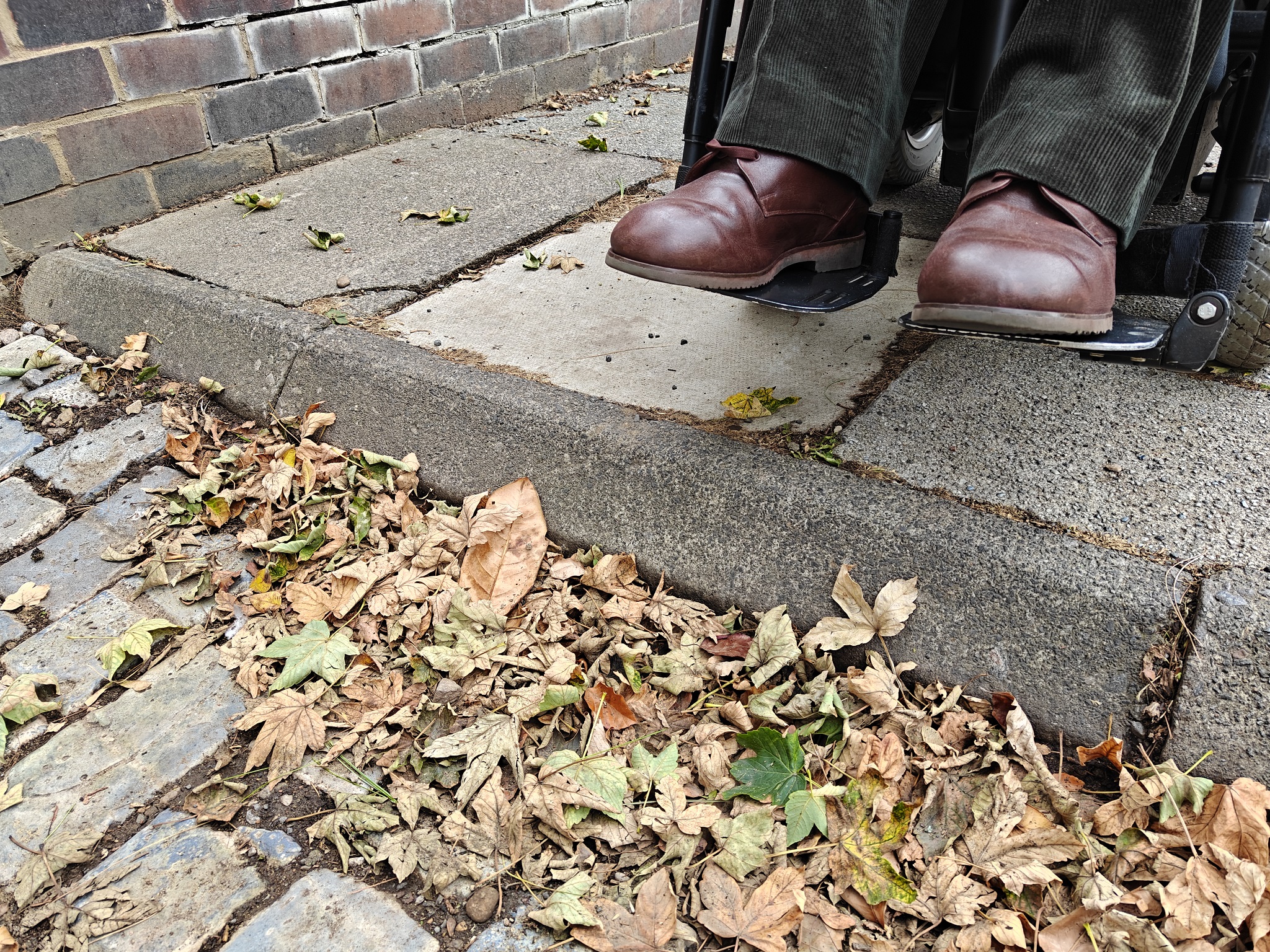
MONEY from a Government-backed initiative to improve the lives of people in Darlington is helping to make key parts of the town more accessible.
Under the Pride in Place initiative, Darlington has been awarded £20m to be invested over the next 10 years predominantly in five disadvantaged areas: Skerne Park, Red Hall, Bank Top, Northgate and Branksome.
However, Pride in Place also aims to support ‘hard to reach’ communities across the borough, including disabled people, and the plan is for £750,000 of the Pride in Place funding to be used to install more dropped kerbs on well-used routes over the next 10 years.
So far, the Pride in Place board has approved £75,000-a-year for the first four years to make it easier for those with mobility issues, including wheelchair-users, parents with pushchairs, and elderly people using wheeled walking aids.
The intention is to maintain that level of investment over the full ten years and, for Gordon Pybus, chair of Darlington Association on Disability (DAD), it is the continuation of a campaign launched more than 20 years ago.
Progress has been made over the past 20 years through funding by Darlington Borough Council, including £100,000 this year, and the additional Pride in Place funding will now enable the dropped kerbs programme to be accelerated.

“We obviously want to install as many dropped kerbs as possible, and we welcome the progress that has been made so far, but the extra Pride in Place funding means we can go further than would have been the case, and that’s great news,” said Gordon.
Due to a neurological condition, Gordon has been a wheelchair-user for 30 years and he is highly respected as a passionate campaigner for improving the lives of disabled people.
Darlington Association on Disability celebrates its 40th anniversary this year. Gordon has been a volunteer with the charity since 1998 and has been a trustee and chair for most of that time.
He acts as a consultant for the local authority on planning applications – advising on accessibility issues – and he’s also working with the council to tighten up rules on dropped kerbs for new developments.
Under Gordon’s leadership, DAD worked closely with Darlington Borough Council to co-produce the original accessibility programme with local funding for dropped kerbs.
“The idea was to start in the town centre and then move outwards along the main routes – like the spokes of a wheel – putting in as many dropped kerbs as possible,” explains Gordon
“The budget back then didn’t allow us to do as much as we wanted, but Pride in Place gives us the chance to fill in some of the gaps.”
However, Gordon stresses that the dropped kerb accessibility scheme goes much further than helping disabled people.
“It is about focusing on the individual as a pedestrian, irrespective of their impairment, and asking which route people would take if they were walking,” he says.
“It is not only wheelchairs and mobile scooters, but people with pushchairs and prams, or wheeled walking aids. People with wheeled walkers have to lift them to get over a kerb and that’s when falls happen.”
Gordon says it’s also important to take the needs of visually impaired people into account, which is why dropped kerbs come with tactile paving, featuring small, raised bumps.
“We have to provide safe crossing places for people with visual impairments, and guide dogs are trained to find the bumps on tactile paving,” he says.

With DAD working closely with highways officials and other departments, £75,000 of the Pride in Place allocation will be spent annually on dropped kerbs for the next 10 years. However, that money is expected to unlock further funding by linking in with other schemes.
Gordon makes the point that cobbled paving – comprising ‘scoria blocks – is also a big issue, making Darlington’s back lanes particularly difficult to cross for those in wheelchairs, pushing prams, or using wheeled walkers.
“It’s clearly not possible to do everything, so we need to prioritise the main arteries and the links in between,” he adds.
“If we can make Darlington’s main walking routes more accessible for disabled people, while also improving the environment for people without impairments, then everyone benefits.
“That’s what makes Pride in Place such a brilliant initiative – it’s about maximising the benefits for the biggest number of people possible.
“And it’s not just a case of the Government giving money to the council, it’s about giving local people a voice on how that money should be spent.”
David Gartland, chair of the Pride in Place board, added: “The dropped kerb investment is a perfect example of how we are listening to the community about how the Pride in Place funding should be spent.
“As chair of Darlington Association on Disability, Gordon is a strong advocate for improving the lives of disabled people, and we are delighted to have been able to use Pride in Place to accelerate the dropped kerb programme. It will not only help disabled people but create a safer environment for everyone.”
Leave a Reply